Drift Happens: Why Your Digital Twin Stops Telling the Truth Two Years In
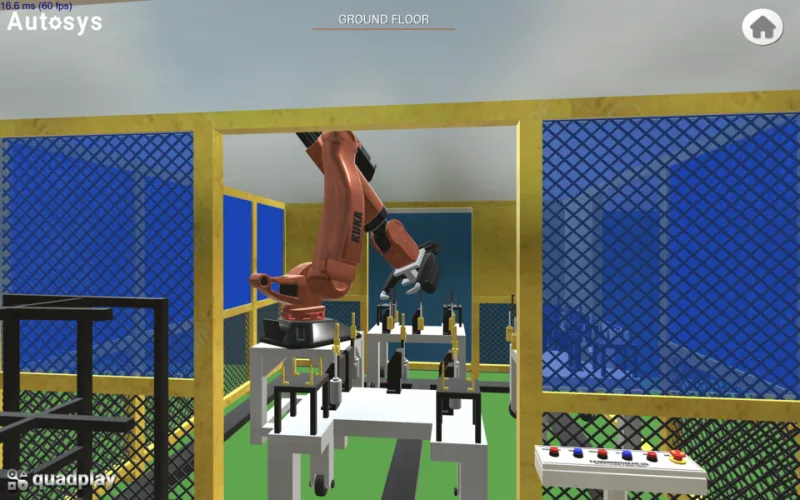
Photo: Autosys Industrial Solutions, CC BY-SA 4.0, via Wikimedia Commons
The pitch was seductive: model the compressor once, wire it to a handful of sensors, and watch a perfect virtual replica hum along on a dashboard forever. Two years later, the twin predicted a bearing replacement window that the actual bearing — already replaced once, by a technician who never logged it — blew past by four months. The twin wasn't broken. It was simply no longer describing the machine that existed.
The Quiet Ways a Twin Lies
Digital twins rarely fail loudly. They diverge in small, deniable increments, and the three most common culprits show up on nearly every project.
Sensor drift. Accelerometers, thermocouples, and pressure transducers all age. A vibration sensor that reads 5% low after two years on a hot header doesn't announce itself — it just shifts the baseline your anomaly detection depends on. If your twin's health thresholds were calibrated at commissioning, every subsequent reading is compared against a world that no longer exists.
Unmodeled wear. Your simulation captured the machine as designed, not as maintained. Clearances open up, surfaces gall, gaskets compress, and a pump develops a recirculation path no CAD model ever contained. Reliability engineers at several Midwest process plants told us the same story: the twin's physics were fine, but its parameters described a machine with zero operating hours.
Silent software invalidation. This one stings the most. A controller firmware update changes a control loop's response time, or a PLC vendor patches a communication stack, and suddenly the twin's actuator model is simulating hardware behavior that's been altered upstream. Nobody flags it because the change log said "performance improvements."
What the Field Actually Sees
A reliability engineer at a large automotive stamping operation described an incident where the twin flagged a servo press for excessive energy consumption. The investigation found the twin was right about the symptom but wrong about the cause — the actual problem was a lubrication schedule that had been informally doubled during a labor shortage. The twin couldn't know that, because the CMMS record and the twin's wear model had never been connected.
The lesson from these failures is consistent: twins don't drift because the math is wrong. They drift because the physical world changes faster than the model's inputs are updated.
A Practical Audit Checklist
If you're responsible for a twin in production, treat it like a calibration program, not a software deliverable. We recommend a quarterly cycle covering:
- Sensor verification. Spot-check at least 10% of instrumentation against handheld references each quarter. Track drift curves per sensor, not fleet averages.
- Parameter reconciliation. Compare the twin's assumed values — stiffness, clearances, friction coefficients — against recent maintenance records. Any part replaced with a non-OEM equivalent is a mandatory model update.
- Firmware change review. Make controller and edge-device updates a formal trigger for twin revalidation, the same way a design change would be.
- Prediction back-testing. Pick three predictions the twin made last quarter and grade them against what actually happened. Publish the score internally. Twins that are never graded are never trusted.
- Ownership assignment. Every twin needs a named engineer whose job includes keeping it honest. Unowned models drift by default.
None of this requires new software. It requires the same discipline you'd apply to a test lab — because that's what a digital twin is. It's a test rig made of math, and math left uncalibrated is just a confident opinion.
The Honest Twin as a Lifecycle Commitment
The vendors selling twin platforms rarely mention the ongoing cost of keeping one aligned with reality. But the engineers who've lived through a divergence event understand it clearly: a digital twin is not a product you buy. It's a maintenance obligation you accept. Budget for the audits, assign the ownership, and grade the predictions — or the machine on your dashboard will keep humming along, faithfully simulating a machine you no longer own.