Defeatured Into Oblivion: The Organizational Cost of CAD and CAE Teams That Never Talk
Photo: Internet Archive Book Images, CC0, via Wikimedia Commons
Somewhere in an American engineering office right now, a design engineer is exporting a STEP file of a housing with 200 machined features, and an analyst is opening it, sighing, and deleting 190 of them. Nobody thinks this is a process. Everybody accepts it as one.
The friction between CAD and simulation teams is usually framed as a tooling problem — file formats, geometry cleanup, mesh generation. It isn't. It's an organizational problem in a technical costume, and no amount of interoperability wizardry will fix a company where the two teams have different goals, different deadlines, and different definitions of what a model is for.
What Gets Lost in Translation
Consider what happens to a part on its way from design to analysis. The designer builds fillets because the fatigue life depends on them — and the analyst defeatures them because they wreck the mesh. The designer models a bolt pattern as a pattern because manufacturing needs it; the analyst collapses it to a connector because the solver doesn't need it. Each decision is locally rational. Together, they produce an analysis of a part that was never designed.
Worse is the loss of intent. When geometry arrives as a dumb solid, the analyst doesn't know which faces are machined datum surfaces, which welds are load-bearing, or that the wall thickness varies because the casting house asked for it. The analyst guesses. Sometimes the guess is wrong, and the resulting report — conservative here, optimistic there — quietly reshapes a design around fictional stresses.
The reverse flow is just as broken. Analysis results come back as colored contour plots, which the designer can't act on without understanding the load cases, the assumptions, and the three simplifications the analyst made at 6 p.m. on a Thursday. The design changes; the analysis doesn't know. Round and round it goes.
Five Fixes That Don't Require a Reorg
None of these are exotic. All of them require someone to decide that the handoff between design and analysis is an engineered interface, not a hallway conversation.
1. Hire for simulation literacy on the design side. When you're staffing design roles, treat the ability to build a meshable, analysis-ready model as a core competency — the way you already treat GD&T fluency. One good question in the interview: "Walk me through how you'd simplify this part for a static FEA without changing its structural behavior." The engineers who can answer it will save your analysts thousands of hours.
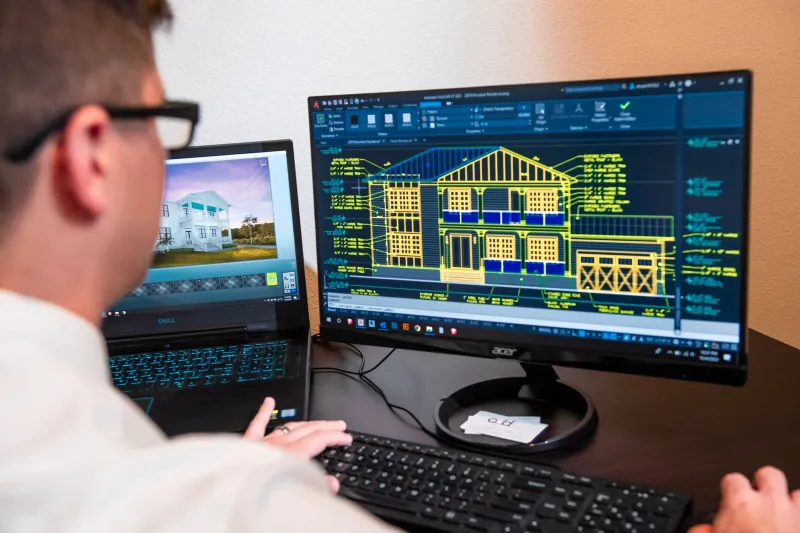
2. Build defeaturing into the CAD tree, not on top of it. Modern parametric systems let you suppress features by role. A part can carry a "simulation configuration" — fillets simplified, cosmetic threads gone, small holes suppressed — that regenerates with the design. When the geometry changes, the analysis-ready version follows automatically instead of requiring a manual cleanup every cycle.
3. Attach intent to geometry. Stop shipping dumb solids. Whether it's PMI annotations, named selections, or a simple companion document, the analysis team should never have to guess which surfaces are functional and which are cosmetic. Five minutes of annotation saves five days of wrong assumptions.
4. Put the analysts in the design reviews — before the geometry exists. Most simulation effort is spent analyzing decisions already made. An analyst who sees the concept sketch can tell you the load path is questionable while it still costs a whiteboard marker to change. An analyst who sees the finished CAD package can only tell you it's too late.
5. Close the loop with a shared model of record. The final indignity is an analysis that validated revision A while production is building revision D. Treat the simulation model like the CAD model: versioned, tied to a design revision, and retired when the design moves. If your PLM system tracks drawings but not models, your quality system has a hole in it.
Simulation-Ready Is a Mindset, Not a Software Feature
Vendors will happily sell you tools that promise to dissolve this boundary — and some of them are genuinely good. But the tool doesn't change the incentive structure that has designers rewarded for shipping geometry and analysts rewarded for finding problems, each optimized for a different finish line.
The companies that iterate fastest — the ones shipping revised hardware in weeks instead of quarters — are the ones where the designer thinks about load paths and the analyst thinks about manufacturability, not because anyone mandated empathy, but because the process makes it unavoidable. Simulation-ready modeling isn't a specialist's afterthought bolted onto the end of design. It's a hiring criterion, a design review agenda item, and a habit. The geometry will thank you. So will the schedule.