The Test Rig Isn't Dead Yet: Where Virtual Validation Breaks and Hardware Saves You
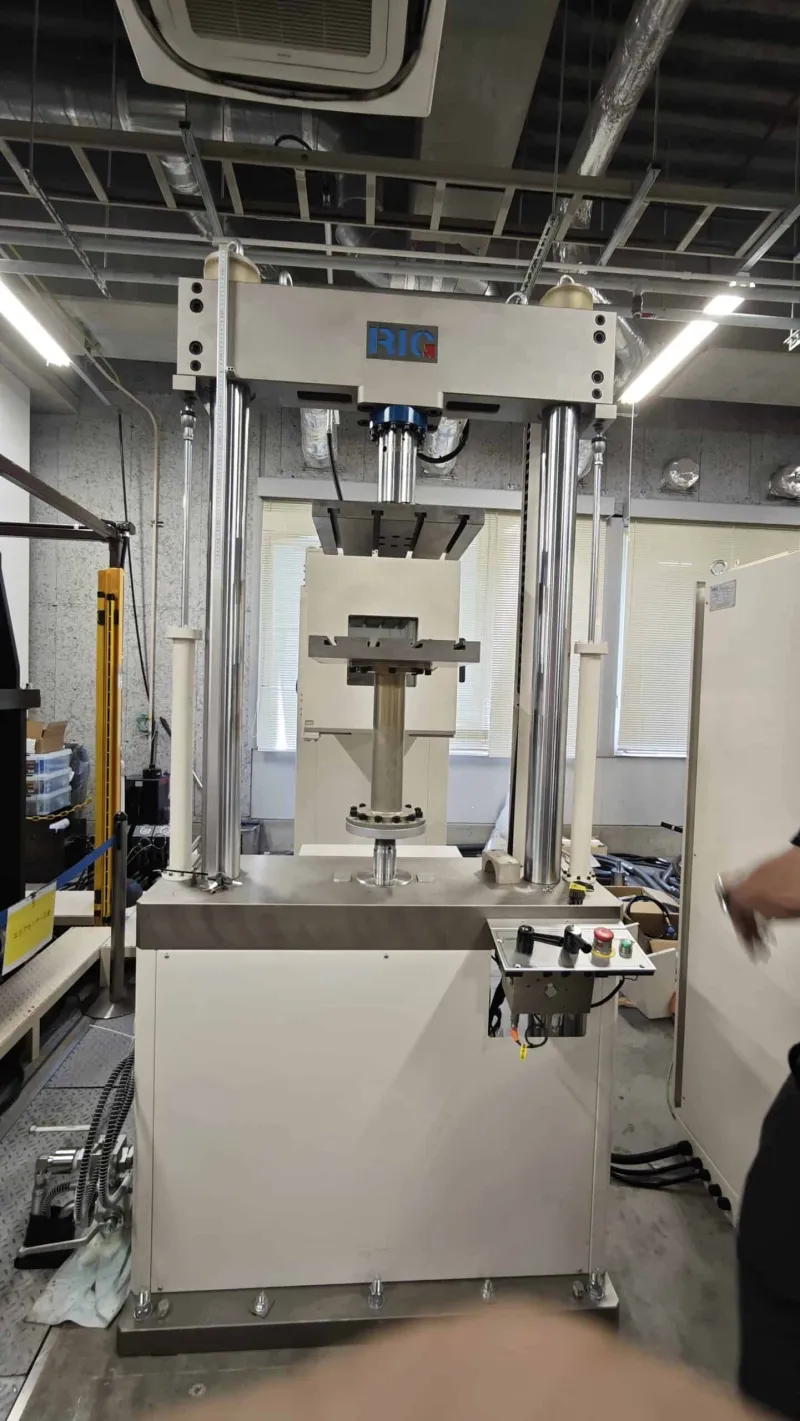
Photo: engineer physical durability test rig industrial laboratory testing machine, via www.rig-testing.com
Walk through enough design reviews at US manufacturers and you'll hear a familiar refrain: why are we still paying for a physical test rig when our simulation environment is this good? It's a fair question, and in some cases the answer is genuinely "we shouldn't." But in others, the answer is a recall notice three years later — and the industry's recent record suggests the second answer is becoming more common than anyone wants to admit.
The Case for Killing the Rig
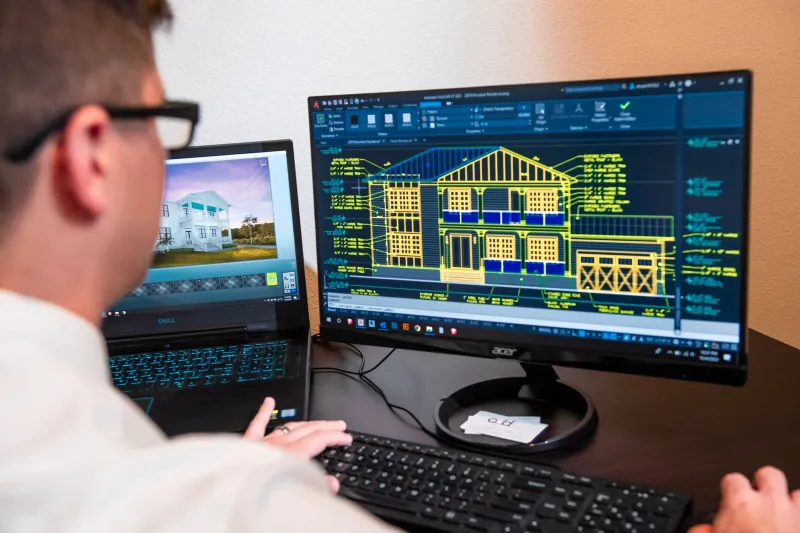
Let's be honest about what simulation has accomplished. For linear statics, thermal steady-state, and well-characterized fatigue loading, modern solvers are not approximations of reality — they're frequently more precise than a strain-gauged prototype, because they give you full-field data instead of discrete measurement points. A well-validated FE model of a bracket under known loads will outperform a physical test on information density every time.
There's also the iteration economics. When a design change costs nothing but compute time, you can explore fifty concepts instead of three. Companies that have shifted early-stage development almost entirely virtual routinely report 30–50% reductions in development cycles. For that phase of the process, the physical rig is often ceremony, not information.
Where Virtual Validation Falls Off a Cliff
The trouble starts where the physics get dirty.
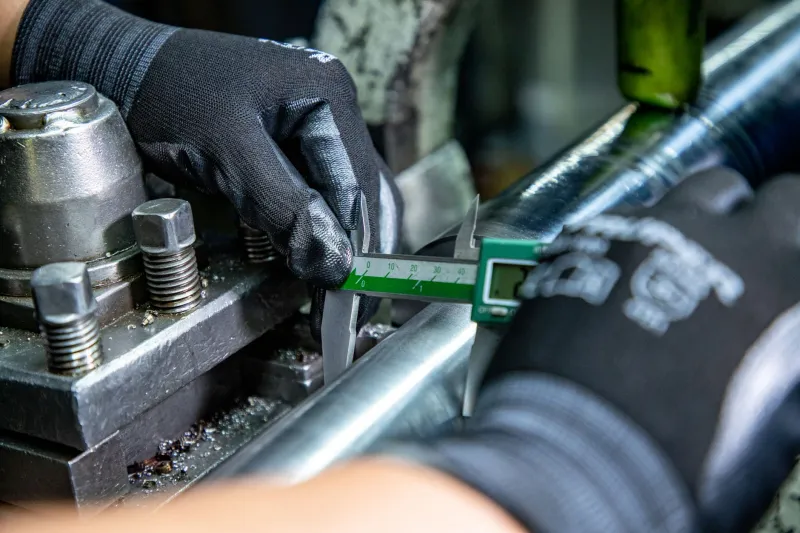
Manufacturing as-built variation. Simulation models nominal geometry. Stamping springback, weld distortion, casting porosity, and machining-induced residual stress mean the part you test is not the part you modeled. A physical rig tests the worst part your process happens to produce. Your simulation tests the best part your imagination can produce.
Coupled, unmodeled environments. Vibration plus temperature plus contamination plus assembly sequence — the multi-physics interactions that dominate real failures are exactly the ones that resist clean modeling. Joint fretting, fastener relaxation, and seal behavior are empirically driven phenomena that no commercial solver predicts reliably from first principles.
The validation chain problem. Every simulation result is only as trustworthy as the material cards and boundary conditions behind it. For a genuinely novel design — new material, new loading regime — there is no validation chain. You're extrapolating, and extrapolation is where rigs earn their keep.
The Price of Being Wrong
The economics deserve a harder look than the toolchain cost comparison usually gets. A well-instrumented durability rig might run $500K–$2M over its life. A single field recall on an automotive component routinely runs into eight figures, before reputational damage. If retiring the rig increases your probability of a missed failure mode by even a fraction of a percent, the math collapses quickly.
The pattern we're seeing in warranty data is telling: companies that went fully virtual on components with complex joints and environmental exposure are absorbing the difference in field failure rates. Companies that kept a lean, targeted rig program — focused on assembly-level durability and environmental testing — got the cycle-time savings without the surprise.
A Sane Division of Labor
The answer isn't nostalgia for test labs; it's clarity about what each tool is for.
- Virtual-first: concept exploration, geometry optimization, load case screening, tolerance sensitivity studies, anything with well-validated material models and deterministic loads.
- Hardware-mandatory: anything involving assembly variation, joint behavior, environmental exposure, novel materials, or regulatory qualification where the analysis method itself must be validated.
- Hybrid, always: use physical tests to calibrate simulation models, then let the validated model carry the design-forward load. The rig's job is to make the simulation trustworthy, not to replace it.
Simulation First, Prototype Never — Never Say Never
The strongest engineering organizations I've watched aren't the ones that abandoned hardware testing. They're the ones that got ruthless about why each physical test exists. A rig that only confirms what the model already predicts is waste. A rig that probes the failure modes your model can't see is the cheapest insurance in the building.
Simulation-first is a sound strategy. Prototype-never is a bet that your assumptions are perfect — and in dynamic systems, assumptions are the first thing reality attacks.